Louis de Broglie Physics: Father of Matter Waves
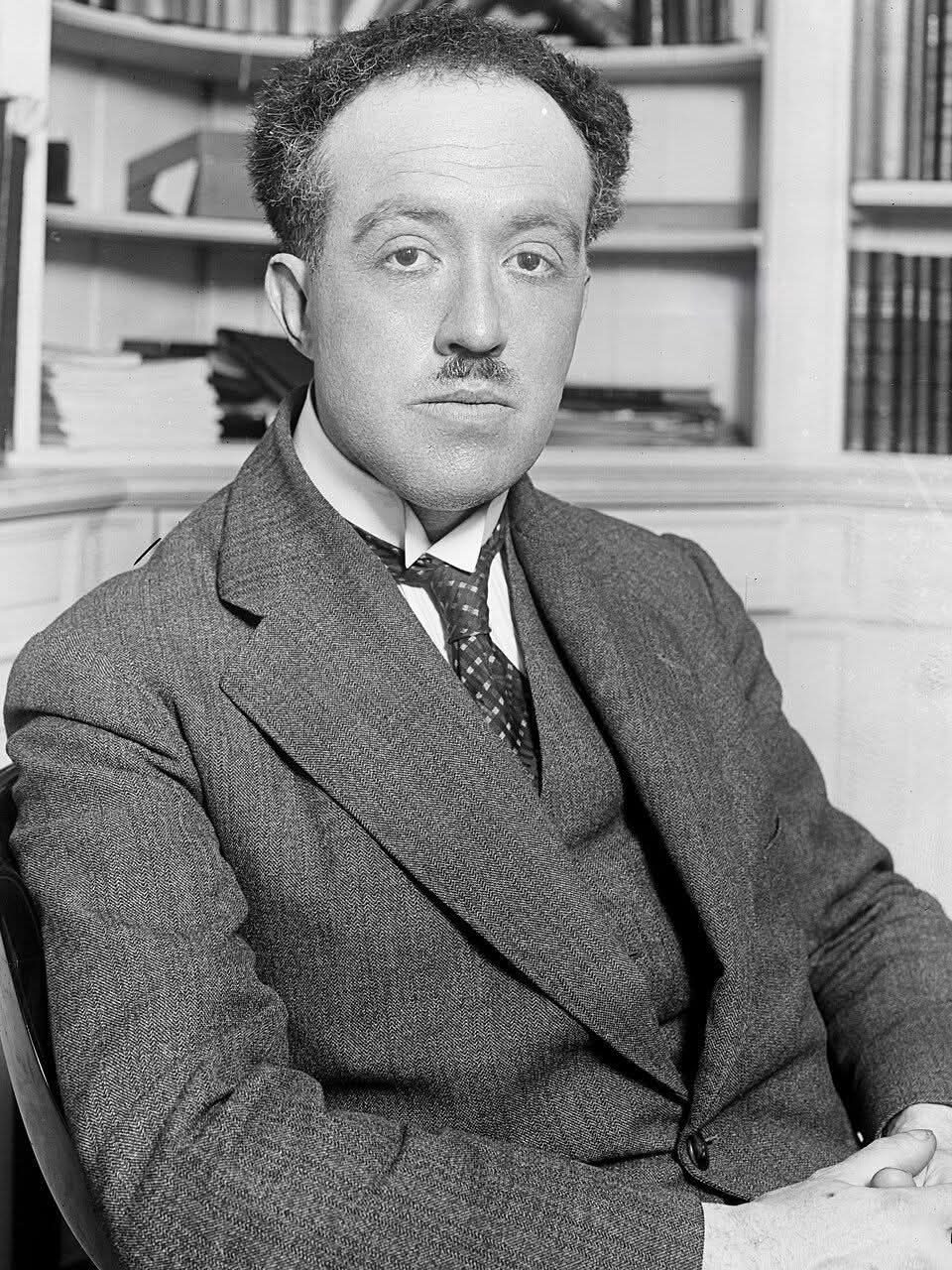
Remembering Louis de Broglie
March 19 marks the memorial anniversary of the illustrious French physicist Louis de Broglie (1892–1987), whose visionary insights reshaped modern physics and laid a cornerstone of quantum mechanics.
Early Life and the Transition to Science
Born into an aristocratic French family in Paris on August 15, 1892, Prince Louis de Broglie initially pursued studies in history and humanities. However, influenced by his elder brother Maurice de Broglie—an accomplished experimental physicist who studied X-rays and radioactivity—Louis became captivated by the mysteries of theoretical physics and resolved to dedicate his life to the discipline.
Wave-Particle Duality: A Revolutionary Insight
De Broglie emerged as one of the chief architects of quantum theory. In his landmark 1924 doctoral dissertation at the Sorbonne, he proposed a breathtakingly bold hypothesis: if electromagnetic light waves could behave like streams of particles (as demonstrated by Max Planck and Albert Einstein), then subatomic matter such as electrons should conversely possess wave-like properties.
He formulated the celebrated de Broglie relation, demonstrating that the wavelength of any moving particle is inversely proportional to its momentum (λ = h/p). This concept was profoundly counterintuitive, as classical physics strictly separated matter as solid corpuscles from energy as continuous waves. De Broglie revealed that physical reality is not so neatly divided: matter and waves coexist in a fundamental wave-particle duality.
Experimental Verification and the Nobel Prize
In 1927, American physicists Clinton Davisson and Lester Germer at Bell Labs demonstrated that electrons fired at a nickel crystal lattice produced distinct diffraction patterns—the unmistakable signature of waves. Simultaneously and independently, George Paget Thomson in the United Kingdom observed electron diffraction through thin foils. De Broglie’s radical conjecture was triumphantly confirmed.
In recognition of his discovery of the wave nature of electrons, Louis de Broglie was awarded the Nobel Prize in Physics in 1929. His theoretical framework directly inspired Erwin Schrödinger to formulate his foundational wave equation, completing the mathematical architecture of wave mechanics.
Technological Legacies and the Electron Microscope
De Broglie’s theoretical vision yielded monumental practical technologies. Because fast-moving electrons possess de Broglie wavelengths thousands of times shorter than visible photons, electron microscopes achieve magnifications millions of times greater than optical microscopes—enabling biologists and materials scientists to visualize individual viruses, proteins, and crystal defects at atomic resolution.
Champion of International Collaboration and CERN
A member of the French Academy of Sciences, de Broglie was an ardent advocate for European scientific cooperation in the aftermath of World War II. In December 1949, at the European Cultural Conference in Lausanne, he proposed the creation of a centralized, cooperative European research laboratory. His proposal laid the direct diplomatic and institutional groundwork for the establishment of the European Organization for Nuclear Research (CERN), today the global epicenter of high-energy particle physics.
An Enduring Legacy
Louis de Broglie passed away on March 19, 1987, at the age of 94. His revolutionary idea that matter vibrates with wave characteristics permanently transformed humanity’s understanding of the cosmos, reminding us that nature’s deepest truths are often hidden behind wondrous dualities.